
The Taliban government does not merely shelter the Tehrik-e-Taliban Pakistan. It arms it, pays its leader, trains its bombers, and sends its own men across the border alongside it — and every word of that comes from United Nations reporting, not from Pakistan. Standing behind that arrangement is India: a state that announced this exact strategy in 2014, ran an identical programme in Sri Lanka in the 1980s, has been caught running agents in Afghanistan, Balochistan and New York, rebuilt its embassy in Kabul in the deadliest year Pakistan has ever recorded, and whose designated Baloch proxy the UN now places in the same Afghan camps as the TTP.
Kabul is not a host. It is a partner.
Begin with the part that is not in dispute, because Pakistan is not the one making the claim. It is the United Nations Security Council’s own sanctions monitors, whose findings are drawn from member-state intelligence and published for anyone to read.
Those monitors record that Taliban commanders handed the TTP weapons: M24 sniper rifles, M4 carbines fitted with ACOG scopes, M16A4 rifles with thermal sights. They record that the Afghan authorities “reportedly provided a monthly $50,500” to the TTP’s leader, Noor Wali Mehsud, and that his fighters’ families receive regular aid packages from the Taliban government. They record an al-Qaeda camp in Kunar province running suicide-bomber training in support of TTP operations. They record TTP leaders housed in Kabul guest houses, carrying travel papers issued by Taliban intelligence that shield them from arrest, and running camps across Kunar, Nangarhar, Khost, Paktia and Paktika. And in their most recent report, they record that Kabul “continued their support” for the TTP, “which escalated attacks against Pakistan,” while some 2,000 TTP fighters were quietly moved deeper into Afghanistan rather than disarmed or handed over.
Then comes the finding that ought to end the argument. The monitors report that Taliban rank-and-file, fighting alongside al-Qaeda, took part in TTP cross-border attacks into Pakistan.
Afghan government personnel crossed the border and joined the raids. That is not a state failing to police its own territory. That is a state at war with its neighbour through a militia it arms, funds, houses and occasionally fights beside. In April 2026, al-Qaeda’s As-Sahab foundation made the relationship official in the only way left to it, publicly endorsing the TTP’s war on Pakistan for the first time.
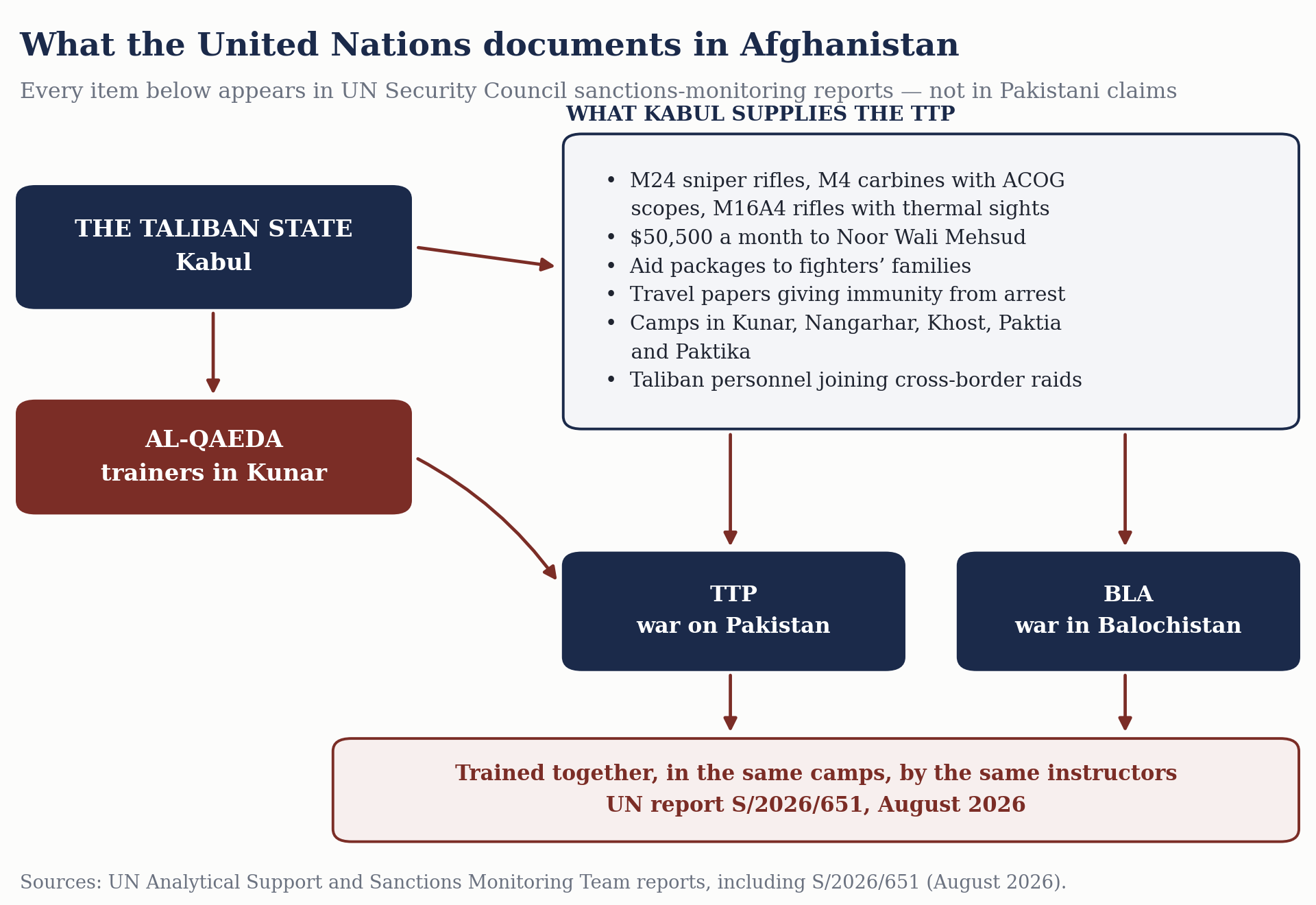
Figure 1 Every element of the Afghan platform, as recorded by UN sanctions monitors.
None of this is abstract, and the cost is countable. In 2020, the year before Kabul fell, 600 people died in violence across Pakistan. In 2025 the figure reached 3,417, the deadliest year in a decade and almost six times the pre-Taliban toll. The Centre for Research and Security Studies, which compiles the count, notes that the escalation has run annually since 2021, “coinciding with the Taliban’s return to power in Afghanistan.”
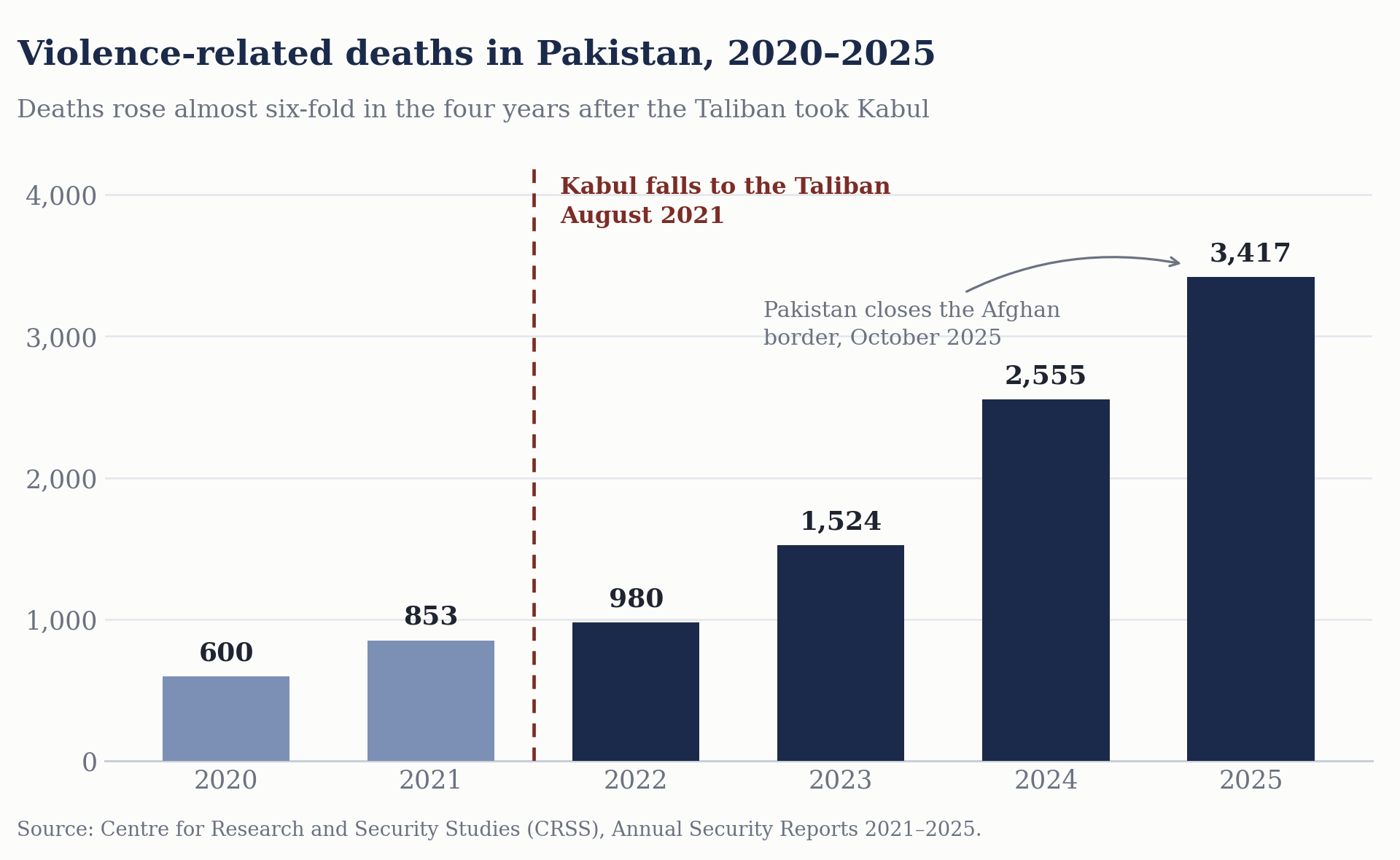
Figure 2 Pakistan’s death toll before and after the Taliban took Kabul.
And when Pakistan finally shut the Afghan border in October 2025, attacks fell nine per cent in November and almost seventeen per cent in December. That is as close to a controlled experiment as this subject permits. Close the door to Afghanistan, and the war goes quiet. The door, therefore, is where the war comes from.
So the first half of this article’s title is settled, and settled without a single Pakistani source. The remaining question is who is standing behind that door.
India told the world exactly what it planned to do
In February 2014, months before he became India’s National Security Adviser — a post he still holds twelve years later — Ajit Doval stood on a stage and described the policy out loud. India’s defensive posture towards Pakistan was a mistake, he said. What India needed instead was “defensive offence”: raising the price for Pakistan by striking at three weak points. One of the three, he specified, was Pakistan’s position in Afghanistan.
Now set that against what the United Nations documents, and the fit is exact. Doval named Afghanistan as the lever — and Afghanistan is precisely where the TTP is armed, salaried and trained. He named Balochistan as the pressure point — and Balochistan is where the Baloch Liberation Army operates, the group Pakistan’s Interior Ministry formally designated “Fitna al-Hindustan” on 31 May 2025, on the finding that it acts “at the behest of India.”
A strategy announced from a public stage in 2014 is the war Pakistan has been fighting since 2021. That is not a Pakistani accusation. It is India’s own security chief, on video, describing the plan before he was handed the authority to execute it.
India has run this exact playbook before
The reflex objection is that a secular democracy would never underwrite religious militants. India has already done the equivalent, and not long ago.
Between 1983 and 1987, India’s Research and Analysis Wing armed, funded and trained roughly 3,363 Sri Lankan Tamil fighters at some thirty-two camps on Indian soil, including ten batches of LTTE cadres. The LTTE was a Marxist-Leninist separatist army — the ideological opposite of everything India’s constitution claims to stand for. India armed it anyway, because it was useful. Sponsorship follows interest, never sympathy, and anyone insisting India would not back men whose beliefs it finds repellent is arguing against India’s own record.
That programme also demonstrates how these arrangements end. In 1991, a woman trained in those camps assassinated Rajiv Gandhi.
And India keeps getting caught
Doctrine and precedent would still leave room for doubt if India had never been caught in the act. It has been caught three times, on three continents, by three parties that owe Pakistan nothing.
In October 2013, American special forces stopped a convoy in Logar province and pulled out Latif Mehsud, the TTP’s second-in-command. He was travelling under the protection of Afghanistan’s intelligence service. Kabul protested publicly, confirming its spies had been cultivating him for months. An intelligence agency was running the deputy leader of the group that would go on to murder 132 schoolchildren in Peshawar, and it took an American raid to bring it to light.
In March 2016, an Indian Navy officer was arrested in Balochistan carrying a genuine Indian passport issued in a false name. India confirmed his nationality before the International Court of Justice and has never explained the passport — a document only a government can manufacture. The 2019 ruling is often described as clearing him. It did nothing of the kind: it found that Pakistan had denied consular access, made no finding on his guilt, and expressly refused to acquit.
And in October 2024, a United States federal indictment charged an officer of India’s Cabinet Secretariat — the department that houses RAW, inside the Prime Minister’s Office — with hiring a gunman to kill a man on American soil. Afghanistan, Pakistan, the United States: three separate legal and military records, not one of them produced in Islamabad.
India walked back into Kabul as Pakistan burned
The last line of defence is that August 2021 severed India’s reach. It did, for ten months. India reopened its Kabul mission in June 2022 and upgraded it to a full embassy on 10 October 2025. The Taliban foreign minister visited Delhi that same month, where India invited Indian firms into Afghan mining. Kabul’s envoy took up his post in New Delhi in January 2026. India’s 2026–27 budget raised aid to Afghanistan while cutting it for other neighbours.
Every one of those steps landed inside the window in which Pakistan became, for the first time, the country most affected by terrorism on earth. Delhi’s warmest year in Kabul was Pakistan’s deadliest year at home. Two governments grew closer while a third counted its dead — and the two growing closer are the two Pakistan says are running the war.
One set of camps, two wars
Which brings the two halves together. The same UN report that documents Kabul’s support for the TTP also finds that Baloch Liberation Army fighters were trained alongside TTP fighters at camps inside Afghanistan, instructed by the same al-Qaeda trainers, and equipped from the same abandoned NATO stockpiles.
Consider what that means. The BLA is the group Pakistan has formally designated an Indian proxy. The TTP is the group Kabul arms and pays. The United Nations has now placed both inside one training system, on one country’s soil, under one set of instructors. Two separate wars against Pakistan, running out of a single address.
And the address leaves fingerprints. A rifle recovered after the Jaffar Express attack — an M4A1, serial number W1004340 — was traced from a Connecticut factory to a 2018 delivery to Afghan forces, and from there to a train full of Pakistani civilians. The Pentagon confirmed the weapon as former American property. It is difficult to think of a cleaner illustration of how Afghan territory converts abandoned Western hardware into dead Pakistanis.
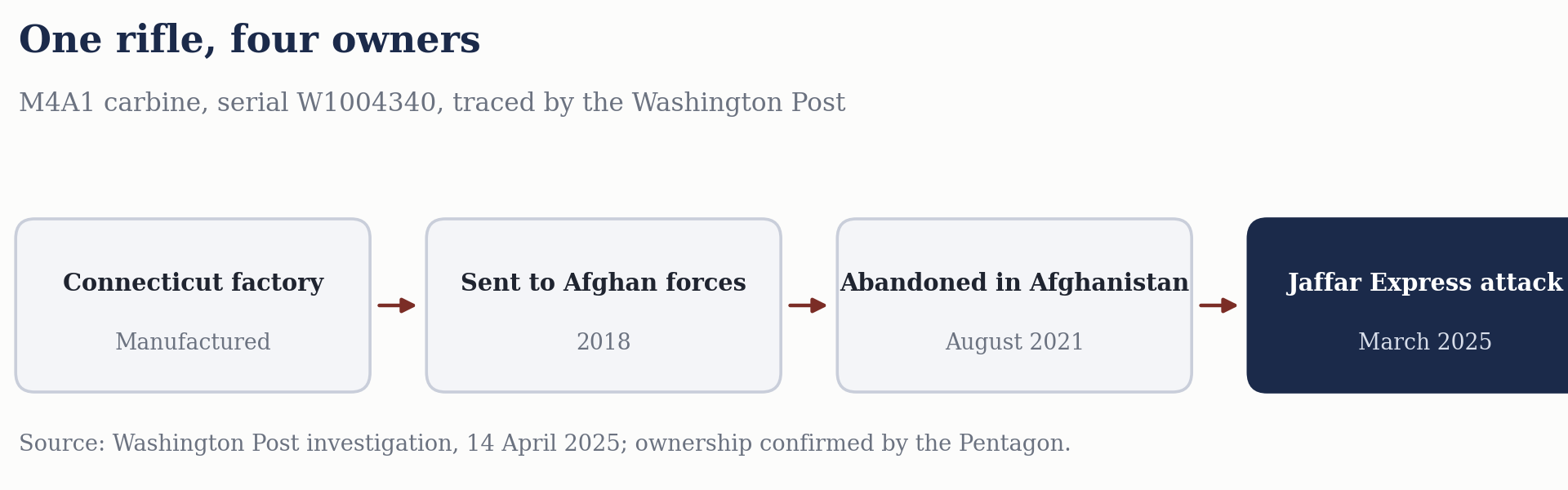
Figure 3 The documented chain of custody of a single recovered weapon.
What the sceptics say, and why it does not hold
Three objections are usually offered, and each collapses on contact with the record already set out here.
The first is that India is secular and would never back religious extremists — an argument answered by the four years India spent arming Tamil Marxists, and by the simple fact that states choose proxies for what they can do, not for what they believe.
The second is that India would never accept the reputational risk. It accepted precisely that risk in New York, and an American federal court indicted an officer of its Prime Minister’s Office for it. A state willing to attempt a killing on the soil of its most important strategic partner is not a state governed by reputational caution.
The third is the serious one: UN reports blame the Taliban, never India. That is true, and it is beside the point. The monitoring team’s mandate covers al-Qaeda, ISIL and the Taliban. It has no authority to investigate the sponsorship of any government — not India’s, not anyone’s — and it has never named a single state, including states whose sponsorship no one disputes. Silence from a body that is forbidden to ask the question is not an acquittal. It is a gap in the terms of reference, and India has been sheltering in it for years.
Conclusion
Afghanistan’s role is no longer arguable. The United Nations has recorded the weapons, the monthly payment, the aid packages, the immunity passes, the suicide-bomber camp in Kunar, and Afghan government fighters crossing the border to attack Pakistan. When Pakistan closed that border, the killing slowed. Kabul is not a bystander to this war; it is a belligerent in it.
On India, ask what would have to be true for the innocent reading to survive. India’s security chief would have to have announced a strategy he then never pursued. A programme India ran for four years in Sri Lanka would have to have had no successor anywhere. Its officer in an Afghan intelligence convoy, its officer arrested in Balochistan and its officer named in a New York indictment would all have to be unconnected accidents. Its return to Kabul, timed to the deadliest year in Pakistan’s modern history, would have to be coincidence. And the United Nations would have to be mistaken that the Baloch group Pakistan calls an Indian proxy trains beside the TTP.
<br>